 Provo
Provo Mice in Walls in Provo, UT
Scratching behind the drywall at 1 a.m. is mice using your walls as hallways. We find where they're traveling, remove them without poison, and seal the routes shut.
Call (385) 406-1774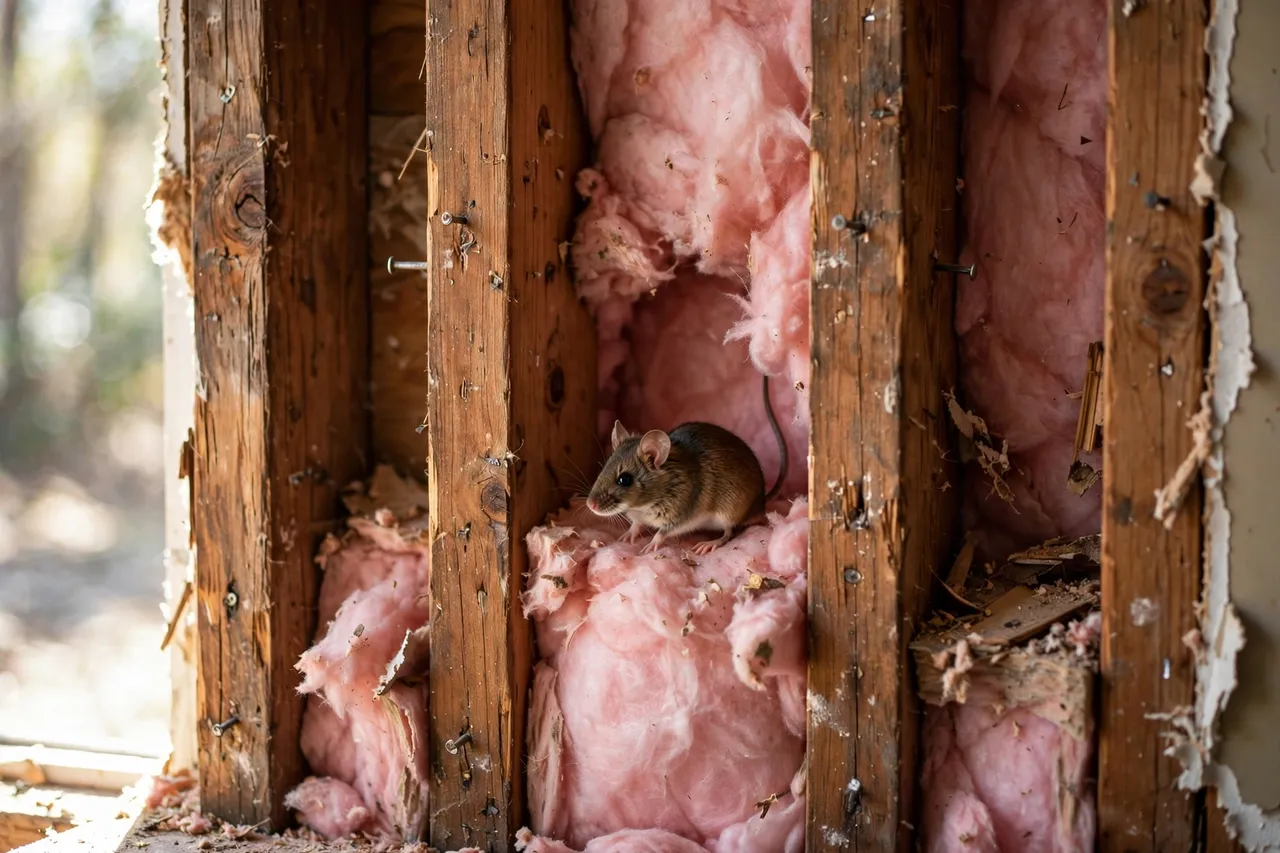
Few household sounds wear on people like scratching inside a wall. It starts at dusk, stops when you knock, and resumes the moment the house goes quiet again — right beside the bed, of course. What you are hearing is mice using the hollow inside your walls as a protected highway. Wall voids connect the foundation to the attic, sit right against your warm rooms, and contain insulation that makes perfect nesting. To a mouse, a wall is not a barrier; it is the safest room in the house.
In Provo, wall activity usually means one of two stories. In older homes near downtown and BYU, settled framing, old plumbing penetrations, and garage gaps let house mice into the voids, where they travel between the kitchen and their nests. In bench homes, deer mice come down from the attic through the open tops of walls. Either way, the sounds mean mice are established — and the voids give them access to almost every room without ever crossing your floor.
Mice in Walls, Done Right
The wrong way to handle wall mice is to throw poison into the void or attic and hope. Poisoned mice retreat into exactly these inaccessible spaces to die, and one carcass in a wall can make a bedroom unusable for weeks. Done right means working from the access points: find where the voids connect to the attic, garage, and utility spaces, trap the mice as they travel, remove every catch, and then close the entrances so the highway shuts down. Patience and placement beat chemistry here, every time.
How We Get It Done
Locate the activity. We combine what you hear — which walls, what hours, what kind of sound — with a physical inspection: droppings at wall bases, openings under sinks and behind appliances, attic sign on the wall top plates, and garage entry points. The map that emerges shows which voids are active and where the mice enter them.
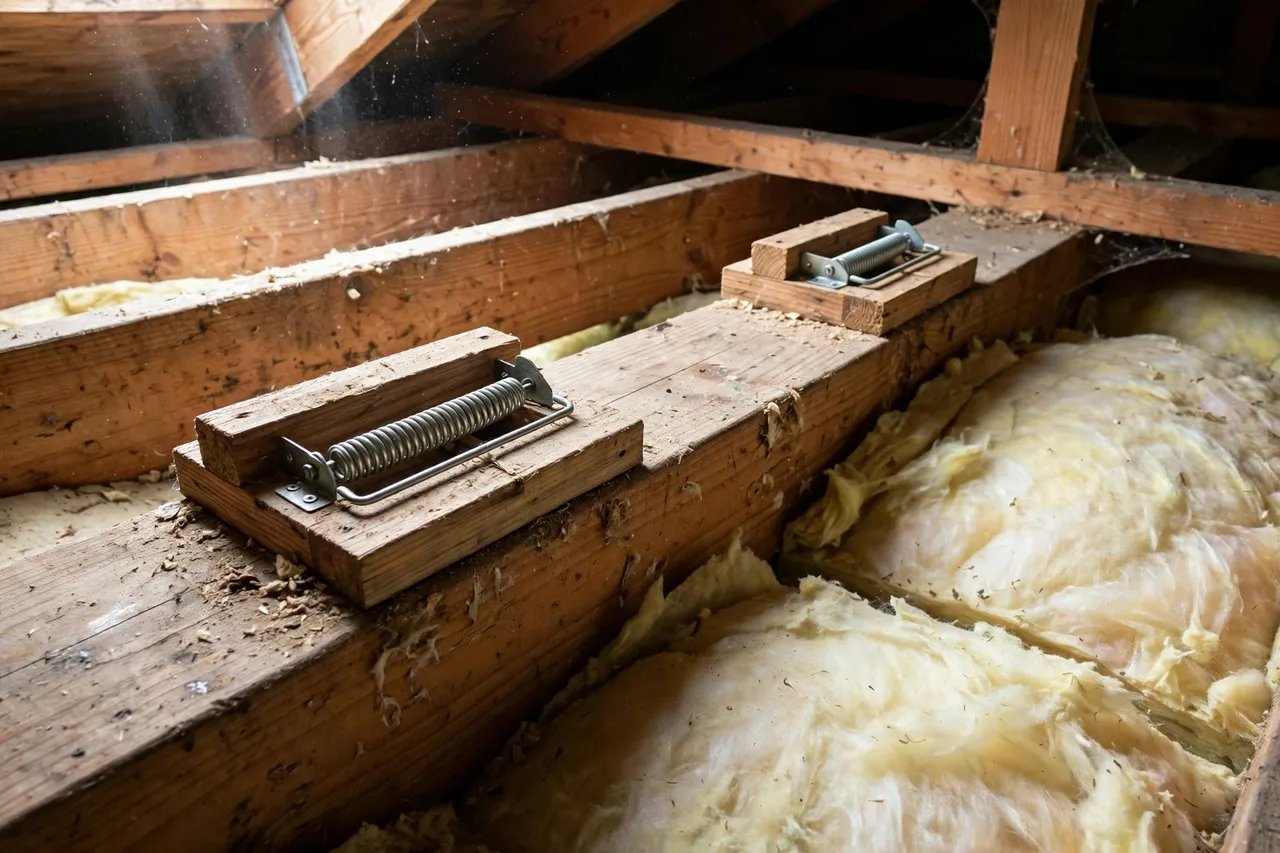
Trap at the connections. Mice must leave the voids to eat and to reach the attic. We set traps at those connection points — attic wall tops, utility room openings, garage wall bases, under-sink plumbing gaps — so catches are confirmed and retrieved, never lost inside a wall.
Close the interior exits. Gaps around pipes, cable pass-throughs, and appliance openings are sealed with chew-proof material so remaining mice can't slip into living spaces.
Seal the exterior entry. The foundation, garage, vent, and roofline gaps that feed the wall system get the same exclusion treatment as any of our mouse jobs — because a quiet wall this month means nothing if the route stays open for October.
Signs You Need Wall Mouse Removal
Scratching, scurrying, or light gnawing sounds inside a wall, concentrated at night; sounds that seem to move vertically — up toward the attic in the evening; a pet that stares at or paws one section of wall; droppings appearing in rooms with no obvious source, especially under sinks and behind the stove; and faint musky odor from an electrical outlet or a closed closet on an exterior wall. A practical test: note which walls and what times for two or three nights. Mice are creatures of routine, and a clear pattern — say, the north bedroom wall, 10 p.m. to 3 a.m. — tells us almost everything about where they live and travel.
Honest Advice Before You Book
Start by listening and noting, not by buying poison. The single worst outcome in a wall-mouse problem is a dead mouse in a void, and poison is how that usually happens. If the activity is new and light, traps placed where the wall meets accessible space — the attic above that wall, the utility room, under the adjacent sink — often catch the travelers within a few nights, and that is a reasonable first step to take yourself. Call us when the sounds are in multiple walls, when droppings are turning up in living areas, when you have already caught several mice and the scratching continues, or when you smell something has already died in a void. Those are signs the population is established or the entry points are beyond a quick fix, and both need a full locate-and-seal job rather than another box of traps.
Mice in Walls FAQs
What exactly am I hearing inside the wall?
Most wall sounds from mice are scratching as they climb the inside of the wall on pipes, wiring, and the rough back side of the drywall, plus light scurrying as they run horizontally along the top or bottom plate of the wall. Gnawing is a slower, crunching sound. Mice are nocturnal, so wall noise typically runs from dusk to about dawn and is loudest where a wall void connects the attic to the lower floors.
Can mice get out of the walls into my rooms?
Yes — wall voids are not sealed containers. Mice exit into rooms through gaps around plumbing under sinks, openings behind stoves and dishwashers, holes where cables and pipes pass, and open wall tops in closets and utility rooms. That is how a wall problem becomes a kitchen problem. Sealing those interior exits is part of the job, along with removing the mice already traveling the voids.
Will the mice in my walls just die off if I wait?
No. A wall void connected to an attic and a food source is a complete habitat: shelter, nesting material in the insulation, warmth, and nightly access to food. A population in the walls breeds where it lives and expands into new voids. Waiting turns a removable problem into a bigger one, and every dead mouse in a void adds odor. The time to act is when you first hear regular scratching.
What if a mouse dies in the wall?
A mouse that dies in a wall void — often from poison, which is one reason we do not use it — produces a strong odor that can last for weeks and cannot be fixed without locating the spot. We remove mice by trapping at access points outside the voids so catches are retrieved, not lost. If you already have a dead-mouse odor, call us: locating and removing it is usually possible through the nearest access point or a small, repairable opening.
Related Mice Control Services
Mice Control
Our complete mice control service for Provo homes — inspection, removal, and exclusion.
Mice Control →Mice in the Attic
Where wall routes usually lead. Clearing the attic removes the colony above the walls.
Mice in the Attic →House Mouse Control
The most common wall traveler in older Provo homes — and how we out-trap its breeding cycle.
House Mouse Control →Scratching Keeping You Up?
Wall mice are on a route — and routes can be shut. Call Provo Rodent Pros to locate the activity and remove the mice the right way.
Call (385) 406-1774