 Provo
Provo Entry Point Sealing in Provo, UT
Every rodent problem in a Provo home started as a gap — usually several. We audit your home opening by opening and seal each one with materials matched to the spot.
Call (385) 406-1774
Entry Point Sealing, Done Right
A mouse doesn't need a door. It needs about a quarter of an inch — a gap the width of a pencil — and Provo homes are full of them. The space where the AC line enters the wall. The corner where the garage door meets the frame. The utility penetration the cable installer drilled a size too big and never sealed. The crack where a settled foundation pulled away from the siding on an older home near downtown or BYU. Each one is small. Together, they're why the traps in the attic never stay empty for long.
Entry point sealing is the methodical version of fixing that: a full audit of every opening in the building envelope, then sealing each one with the material that belongs there. It's the core of our rodent exclusion work, and it's most effective right after rodent removal has cleared the animals already inside — so the seals go up against an empty house, not a occupied one.
How We Get It Done
We start with the evidence. Droppings pool near active entries. Grease rub marks streak the routes rodents travel nightly. Gnawed edges widen the holes they use most. Reading those signs tells us which of the dozens of small gaps in a home are actual doors and which are just cosmetic.
Then the systematic walk. Foundation line, sill plate, every pipe, wire, and line that pierces the walls, dryer and bath vents, corners where materials meet, and up to the eaves. Indoors, the attic and crawl space get checked for daylight leaks — if you can see light through it, a mouse can get through it.
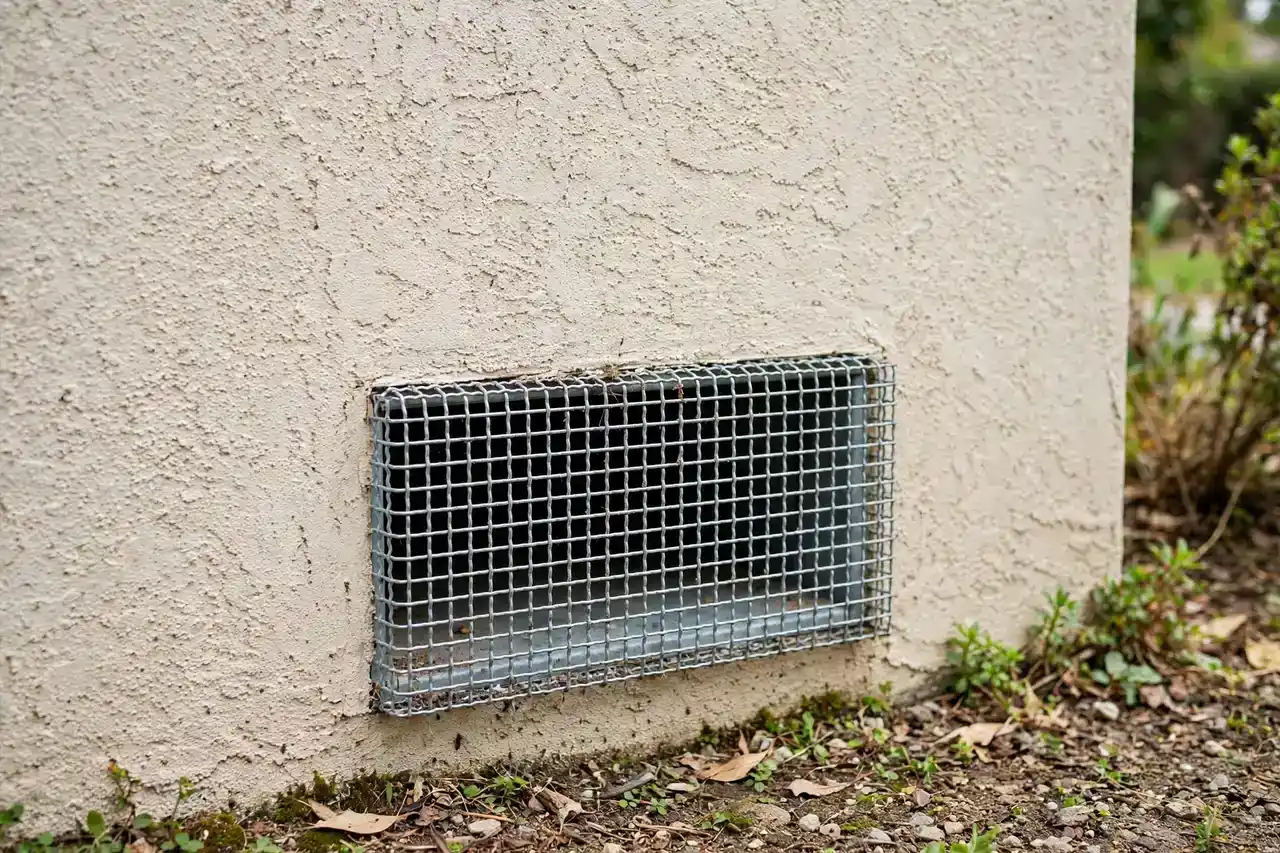
Sealing follows a deliberate order. Active removal finishes first. Then we seal from the least-used openings toward the most-used, so nothing gets trapped inside mid-job. Materials are matched to each location: copper mesh packed into pipe penetrations, steel wool and sealant in small irregular gaps, hardware cloth where airflow must continue, sheet metal where wood has been chewed. Every sealed point is documented against the audit list.
Signs You Need Entry Point Sealing
Rodents keep coming back after trapping or treatment — the clearest sign the house is still open. You've found droppings in the garage, utility room, or along foundation walls. Previous fixes were foam, caulk, or filler, and activity continued anyway. Your home is older — settled foundations around downtown Provo and the BYU neighborhoods open seams that didn't exist when the house was built. You've had work done — new HVAC, plumbing, or cable installs — and the new penetrations were never sealed. Any one of these means an audit will probably find something worth closing.
Honest Advice Before You Book
Be skeptical of anyone who quotes sealing over the phone without walking the house. The price of this work lives entirely in how many openings there are and where they're hiding, and nobody knows that from a doorstep conversation. Also be honest with yourself about DIY: sealing two or three visible gaps with copper mesh is a fine weekend project, but most homes that "were already sealed" and still have mice were sealed at ground level only — the garage corners and roofline never got touched. One more thing: sealing is a one-time fix for the gaps that exist today. If your home is still settling or you're planning renovations that cut new holes, ask us about whole-home rodent proofing, which builds checking into a routine instead of a single job.
A note on deer mice specifically. In Provo, the animal behind most entry-point problems is the deer mouse, and it carries a health consideration other mice don't: hantavirus, which can be present in droppings and nesting material. That doesn't change how we seal — the gaps are the gaps — but it does change how cleanup around active entries should be handled, with care rather than a dry broom. When an audit turns up heavy droppings near entry points, we'll flag it and talk through safe cleanup before the sealing begins. It's one more reason the audit looks at evidence first instead of just walking the walls.
Entry Point Sealing FAQs
How do you find entry points I can't see?
Rodents leave evidence: droppings clustered near entries, dark rub marks along travel routes, gnawing, and daylight visible from inside the attic or crawl space. We combine that evidence with a systematic exterior walk, checking every penetration and transition at rodent height.
Why does sealing happen after removal, not before?
If entry points are sealed while rodents are still living inside, the animals get trapped in wall voids and attic spaces, where they cause more damage trying to escape and can die in inaccessible places. Removal first, confirmation second, sealing last — in that order.
Can I just seal the gaps myself with foam?
Foam alone will not hold — rodents chew through it quickly. Small gaps can be sealed DIY with copper mesh or steel wool packed in and backed with sealant, but the bigger job is knowing which gaps matter. Most failed DIY sealing we see missed the roofline and garage corners entirely.
What if my home settles and new gaps open?
That happens, especially in older Provo homes with settled foundations. Metal and mesh seals in existing gaps stay put, but new cracks can appear over the years. An annual walk-around — yours or ours — catches new openings while they're still small and cheap to close.
Related Services
Roofline Exclusion
Ground-level sealing only works if the top of the house is closed too. Soffits, roof returns, and ridge vents, sealed properly.
Secure the roofline →Rodent Proofing
The whole-property prevention approach — sealing plus the yard and habit factors that draw rodents to your home in the first place.
Proof the whole property →Rodent Removal
Rodents already inside need to come out before the doors close. Safe, thorough removal for attics, walls, and crawl spaces.
Remove what's inside →Find the Gaps Before They Do
Provo Rodent Pros is open Mon–Sat, 7am–7pm. Call for a full entry-point audit of your home.
Call (385) 406-1774