 Provo
Provo Voles in Your Lawn in Provo, UT
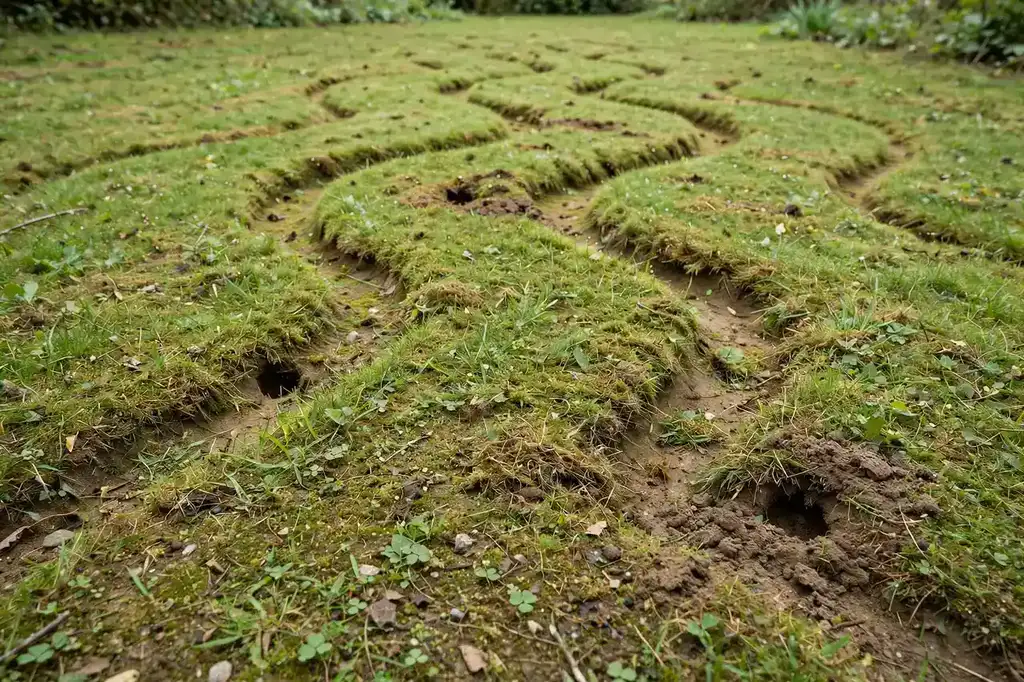
The snow melts and your lawn looks like a subway map — trails everywhere, and a young tree dying at the center. That's a winter's worth of vole work, revealed in one week.
Call (385) 406-1774
Voles in the Lawn, Done Right
Every spring in Provo, the same discovery repeats across Utah County: a homeowner watches the last snowbank shrink off the lawn and finds the yard underneath transformed — a network of neat, winding runways clipped through the grass, small burrow holes at the edges, bare dirt patches, and, at the base of the young apple tree, bark chewed clean away in a ring. It looks like it happened overnight. It happened all winter.
Meadow voles love snow. A snowpack is a roof: under it, voles are hidden from owls and hawks, insulated from the cold, and free to run their surface trails and feed for months. Utah County lawns — especially on the bench, near open fields, and around the orchards and gardens this valley is full of — give them the grass, the cover, and the tree bark they need. By spring, the population under one yard's snow can be substantial, and the breeding season is just starting. That's why spring discovery isn't the end of the problem; without control, it's the beginning of a bigger one.
How We Get It Done
Map the network. We walk the yard and read the runway system: which trails are active, where burrow openings cluster, which trees and beds are being hit. Vole control aimed at the actual network works; scattered effort doesn't.
Trap the runways. Traps set directly in active surface runways — voles run the same routes daily, which makes runway trapping effective. Visits continue through the active period until catch rates and fresh sign drop off.
Cut the habitat. The lawn itself gets attention: grass kept shorter along edges and fences, deep mulch pulled back from trunks, dense ground cover thinned where it shelters runways, woodpiles and debris moved off the turf. Voles without cover are voles exposed to every owl in the neighborhood.
Protect the trees. Fine mesh or hardware-cloth cylinders around the trunks of young trees, shrubs, and especially fruit trees — set slightly into the soil and tall enough to stand above the snow line. In Utah County, where a backyard peach or apple tree is a real investment, this is the highest-value step on the page.
Repair and reseed. Once pressure is down: rake out runway debris, reseed bare patches, and let spring growth close the trails. Grass recovers. Girdled trees, mostly, don't — which is why protection outranks repair.
Signs You Need Lawn Vole Control
Runway networks visible after snow melt or in longer grass. Burrow openings along fences, beds, and the foundation line. Bark damage at tree bases — check below the mulch line, where it hides. Bulbs that never come up. A spongy feel walking the yard. Or a history: if voles tore up the lawn last spring, an untreated yard in a good habitat spot will be revisited.
Honest Advice Before You Book
Timing is worth more than intensity here. The single best move a Utah County homeowner can make is the fall one: population down and trunk guards on before the snow flies. Spring control absolutely helps — it protects this year's growth and cuts breeding numbers — but no spring program can un-girdle a tree. Also, be realistic about yards that border fields, orchards, or open ground: voles will keep testing the boundary, and the goal is sustained low pressure and protected trees, not a vole-proof force field. Anyone who promises to eliminate voles permanently from a bench lot next to open fields is selling you a story.
Lawn Vole FAQs
Why do I only see vole damage in spring?
Because voles do much of it in winter, hidden under snow. Snow cover is protection from predators, so voles run and feed freely on the surface beneath it for months. When the snow melts, the full runway network and bark damage appear all at once — it looks sudden, but it accumulated all winter.
Will the runways in my lawn grow back?
Usually, yes. Runways are clipped grass and shallow surface trails, not deep excavation. Once vole pressure is reduced, raking the trails, reseeding bare patches, and normal spring growth repair most lawns within a season. The serious, non-recoverable damage is girdled trees, not the grass.
How do I protect my fruit trees from voles?
With a cylinder of fine mesh or hardware cloth around the trunk base, set slightly into the soil and tall enough to clear the winter snow line. Install before winter — girdling happens under snow cover, so a guard added in spring is a season too late for that year's damage.
When should vole control happen?
Two windows matter most: fall, to cut the population and guard trees before snow gives voles cover, and early spring, to trap the survivors before breeding ramps up and to repair damage. Mid-summer work still helps, but the highest-value timing is before winter.
Related Services
Vole Control
The full vole program for yards, gardens, and orchards — habitat, trapping, and physical protection.
Vole control →Rodent Inspection
Activity in the yard and the house? An inspection sorts out voles, deer mice, and house mice in one visit.
Inspections →Rodent Proofing
Yard rodents pressuring the house too? Proofing keeps outdoor populations from becoming indoor ones.
Proofing →Before the Snow Flies
Spring damage control or fall prevention — either way, the earlier the call, the more of your yard survives. Mon–Sat, 7am–7pm.
Call (385) 406-1774